Showing posts with label SCA. Show all posts

4.20.2016

Hear! Hear! Shakespeare!


Celebrate Shakespeare’s Life and Death on April 22, 2016 

In honor of the impending visit of Shakespeare’s First Folio to Boise State
, Laura Coleman and Audrey Williams of  Access Services have staged a display of Shakespeare materials at the Circulation desk. 


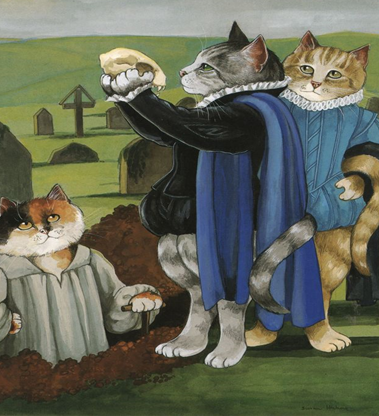
You can peruse all manner of Shakespeare items from serious drama and comedy, sonnets, music, the Globe Theatre, and Will’s life. We’ve also included the adorably cute Shakespeare Cats, by Susan Herbert with Hamlet in fine feline form.
Research Shakespeare with the Theatre Arts guide http://guides.boisestate.edu/theatre


Find streaming videos of Shakespeare plays http://www.ambrosedigital.com/content/view/119/186/


And check out the Idaho Shakespeare Festival.
Audrey Williams,
Access Services


2.18.2016

Library archivists find use for the MakerLab’s 3D printers


IMG_3635.JPG
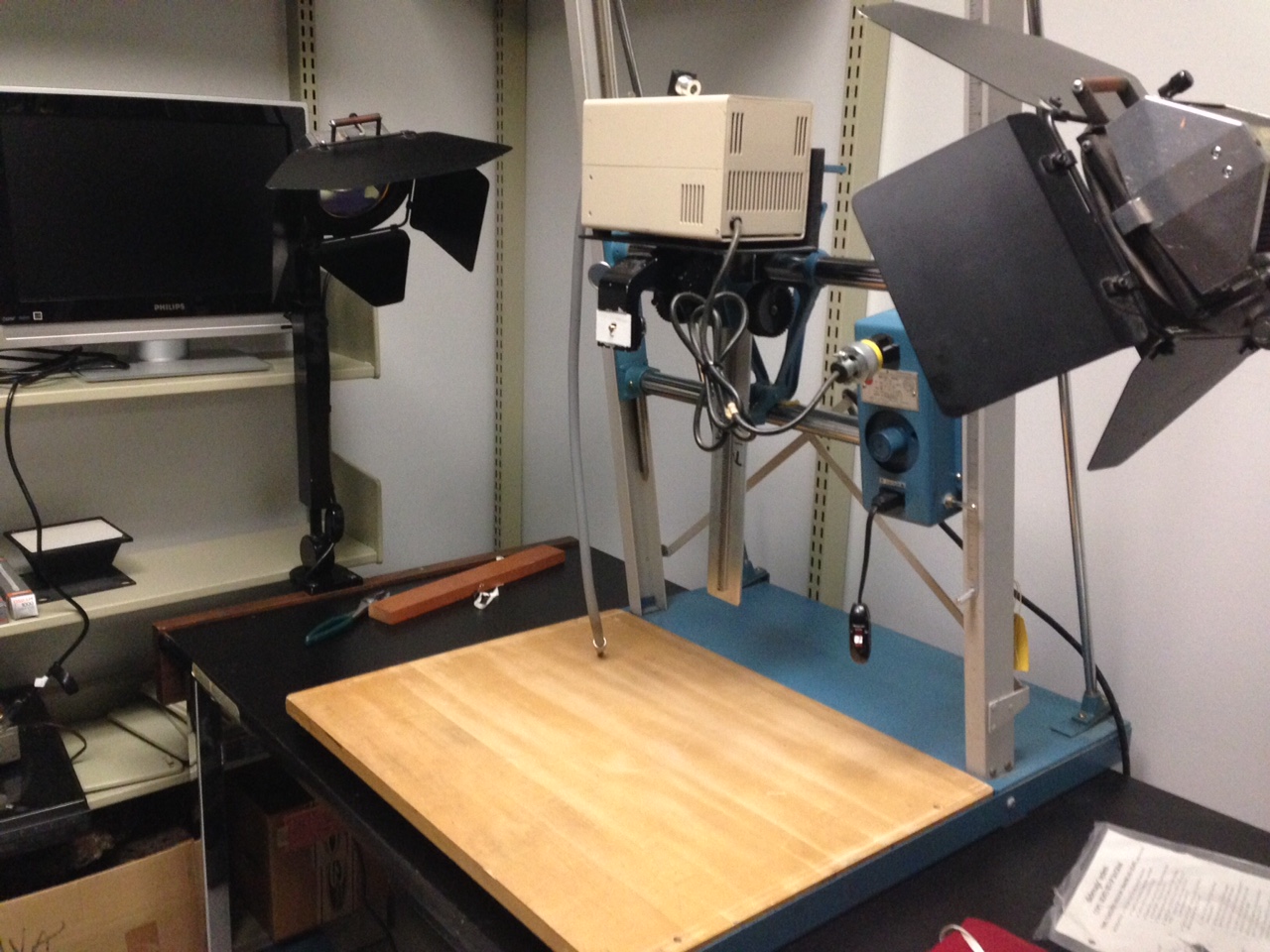
3D printed camera mount for tabletop photography
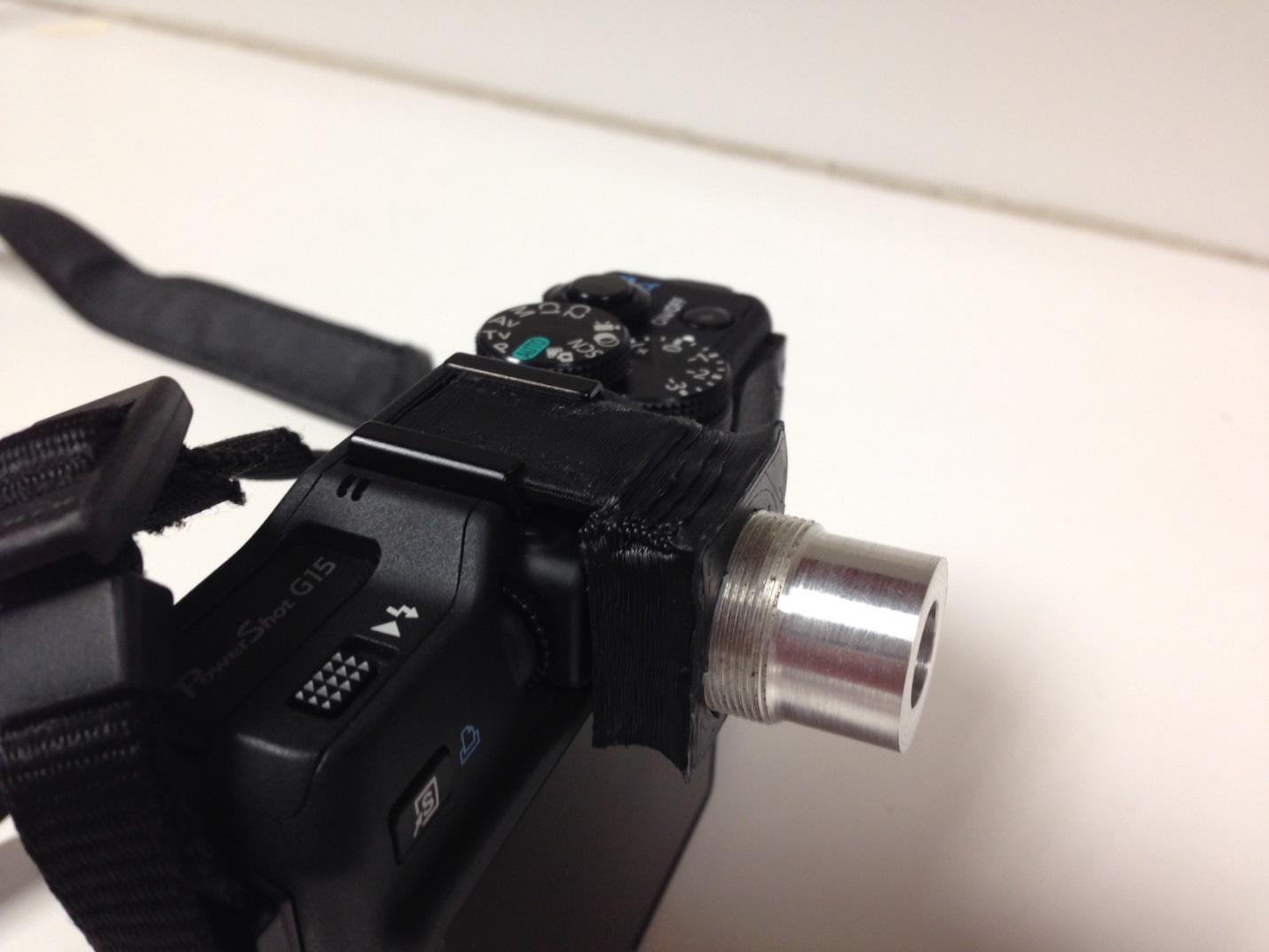
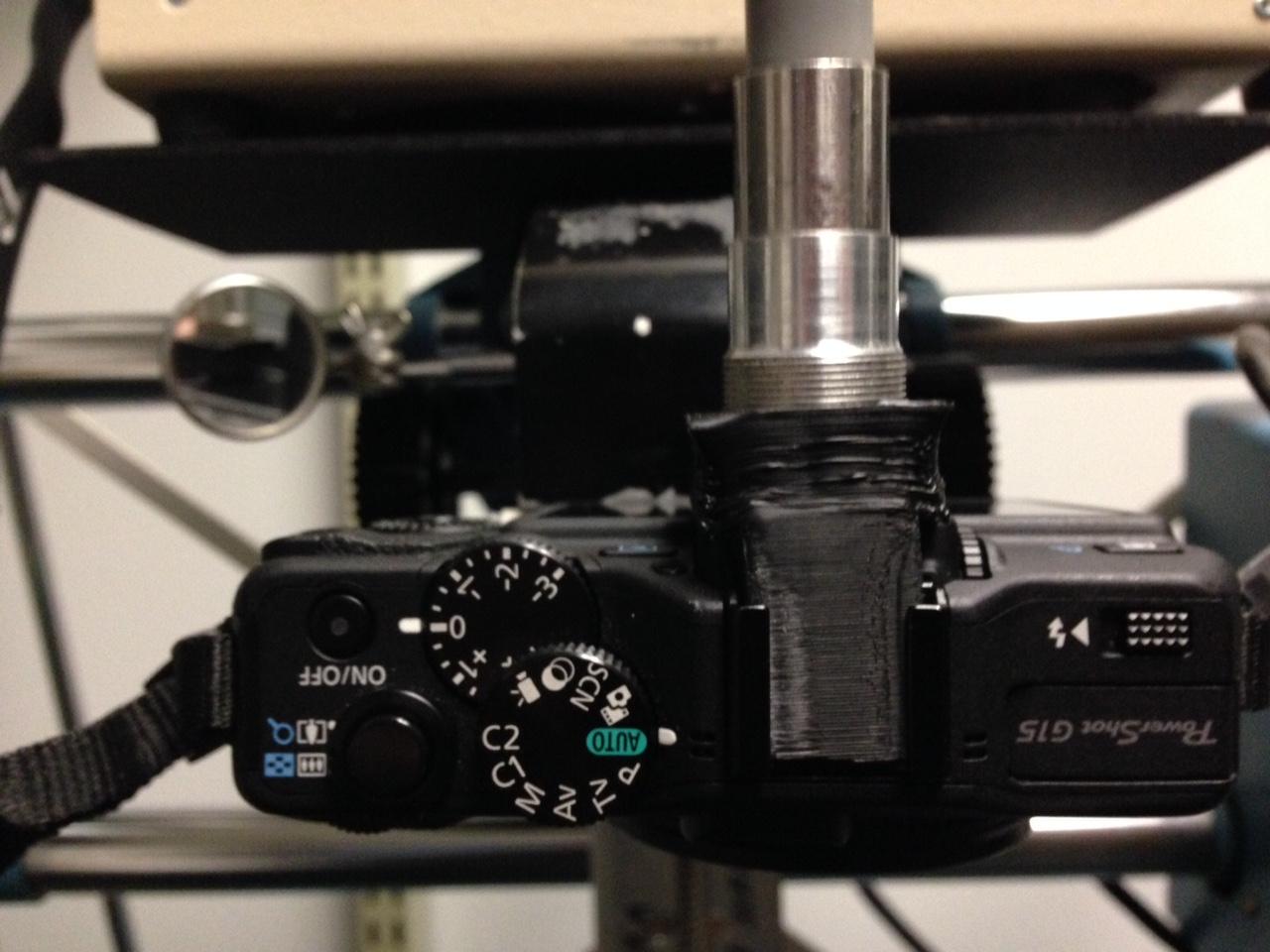
Special Collections and Archives needed a mount to join a 1980s fiber optic light source to a standard accessory mount on a Canon G15. This was an easy fix with 3D design. Digital Archivist Jim Duran designed an adapter using Tinkercad that included a tab that would slip into the camera’s accessory mount and a hole to screw in the light source flange.
He printed this design using the Library’s LulzBot Mini 3D printer. We found out the printing software Cura was accidentally set to a different filament type and the print came out a little distorted, but it still worked.
The original adapter used threads to screw into a SLR camera. New
cameras, specifically our Canon G15, do
es not have these threads.
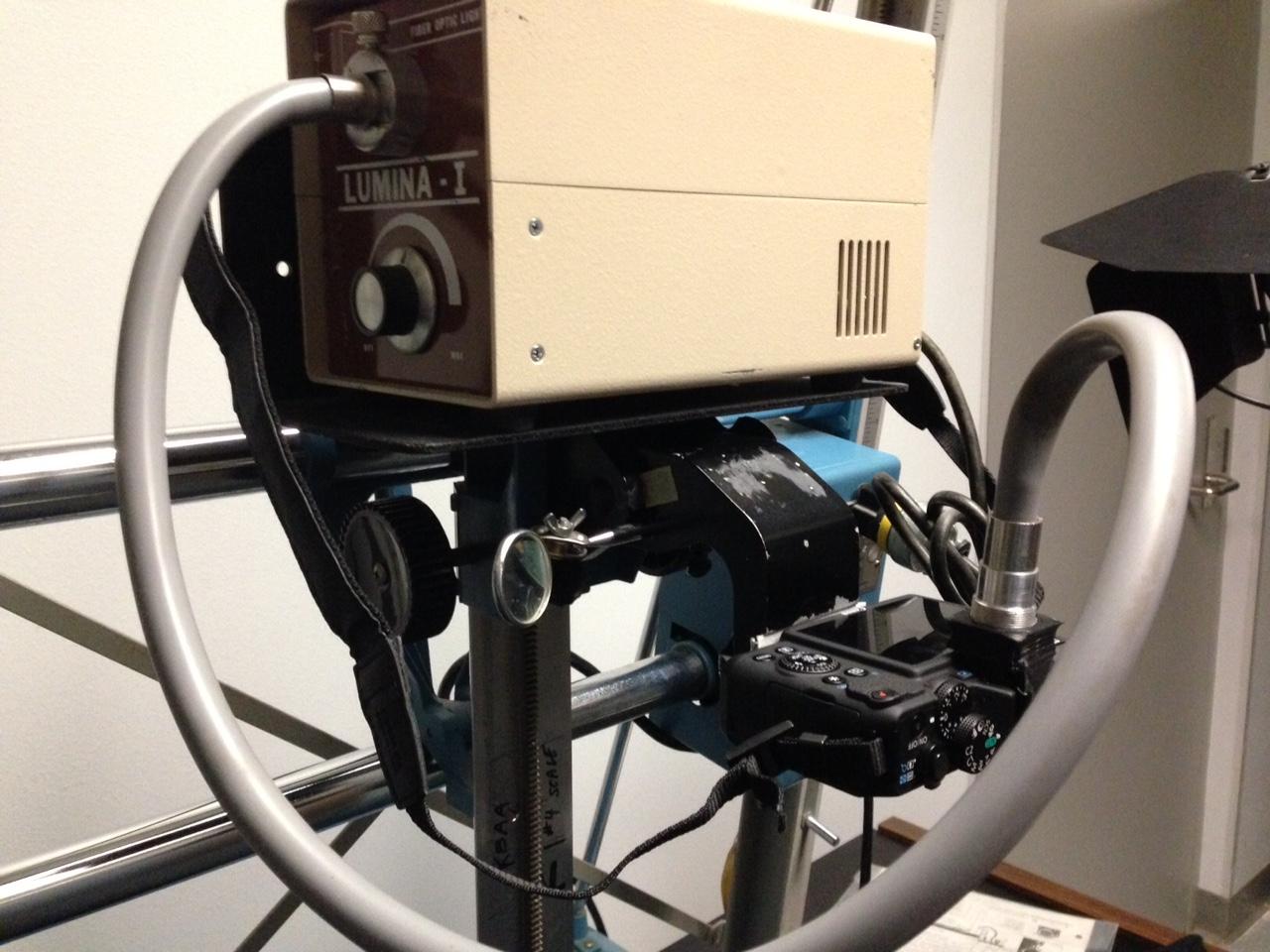
The camera mounted to the overhead equipment with the
fiber optic tube connected.
A better view of the fiber optic light source.
This is the frame projected through the camera onto the work surface
through the viewfinder. The operator could then make sure the
artifact is within the borders and aligned properly.
IMG_3636.JPG
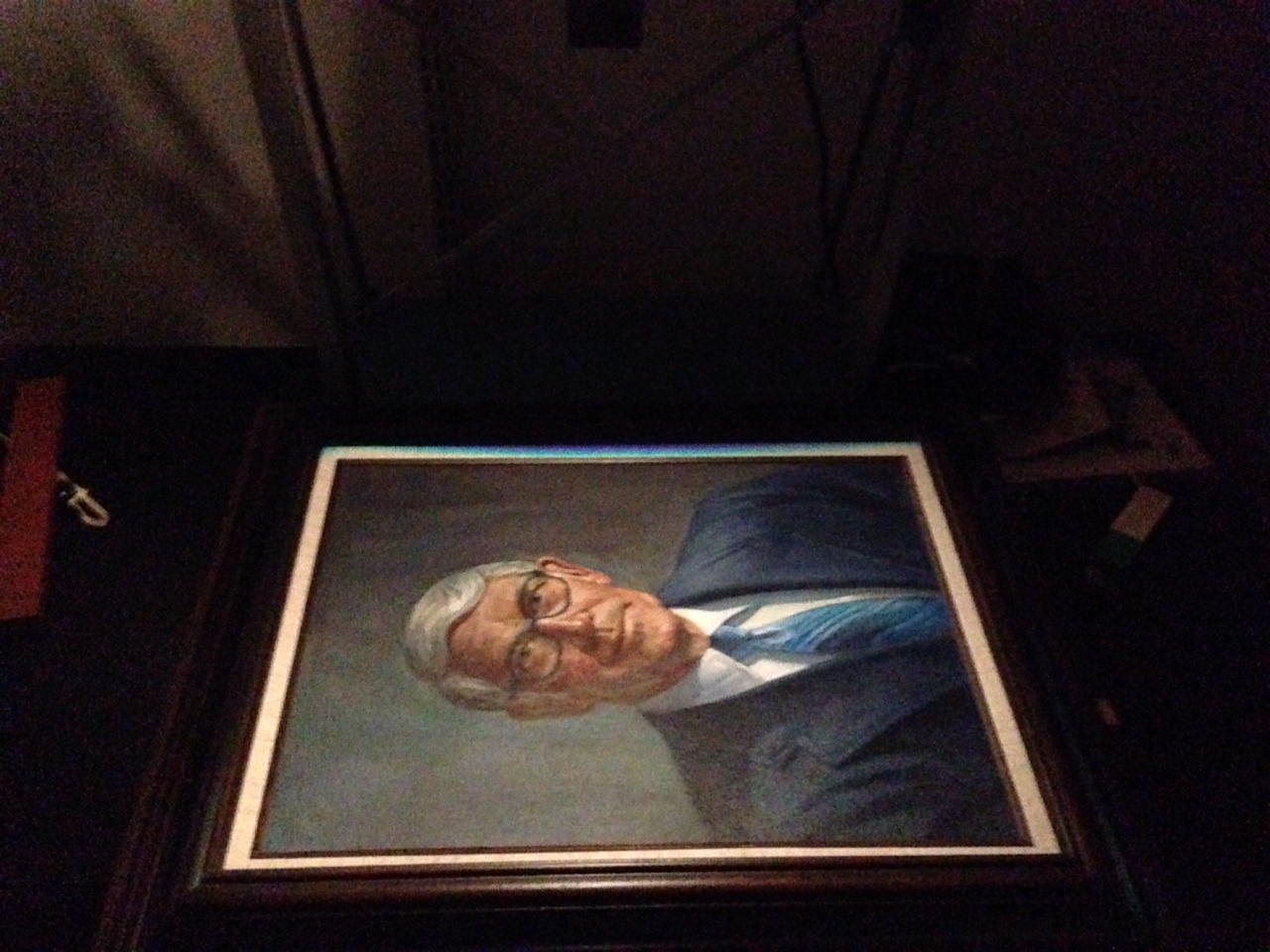
An example of a the viewfinder light projected onto a portrait.
With this lighting the operator can make sure the camera will
get the entire painting. The operator will then switch to
the 45 degree lighting for shooting.
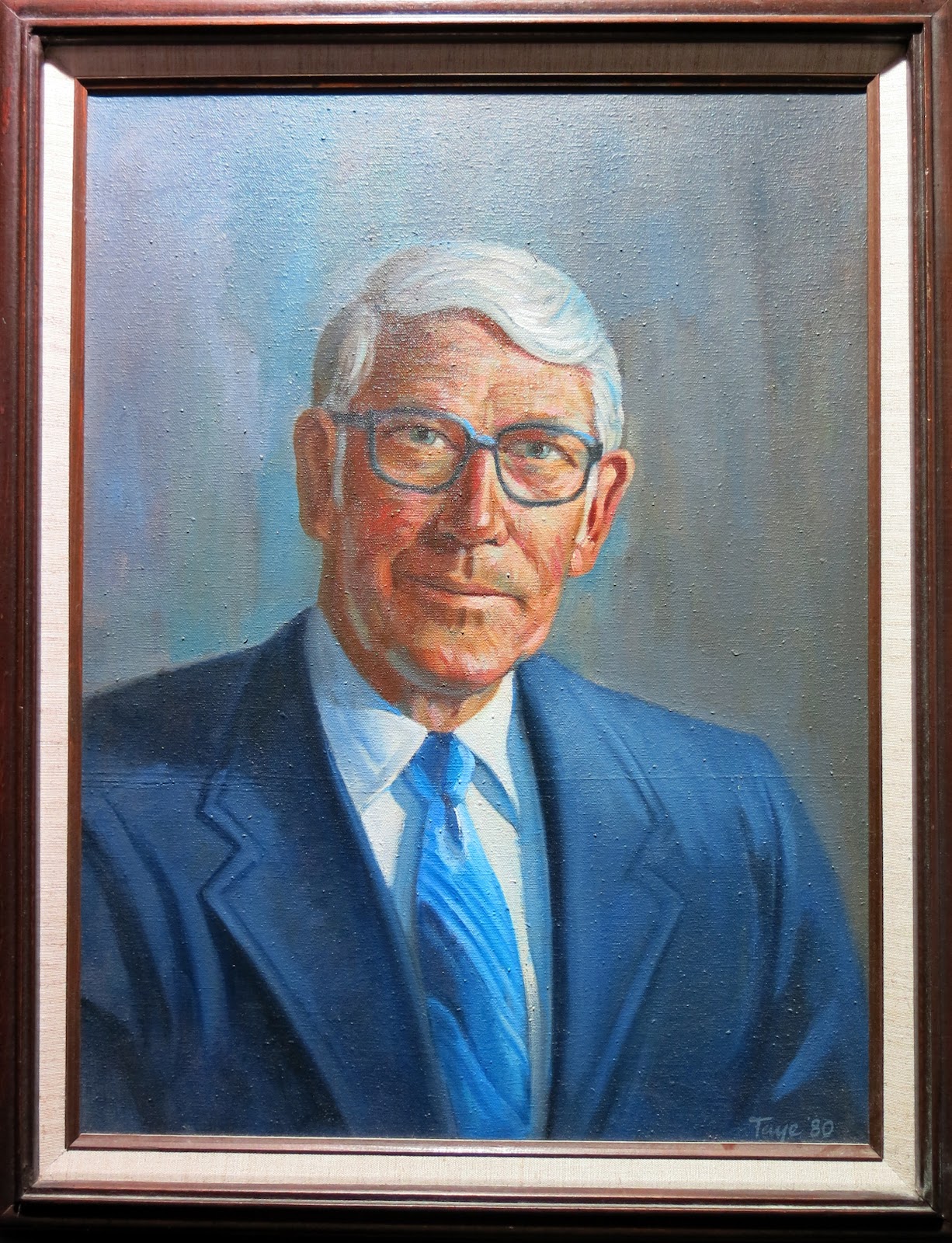
MSS_085_Portrait.jpg
The final product, a portrait of former football head coach
Lyle Smith, captured using the tabletop camera.
Using free software like TinkerCad, and the Library’s 3D printers, make it easy for students and staff to problem solve everyday challenges. 
Jim Duran,
Special Collections and Archives

1.25.2016

ScholarWorks display in Special Collections and Archives

The ScholarWorks unit, in conjunction with Special Collections and Archives (SCA), has created a display showcasing many different types of Boise State scholarly outputs.

Both ScholarWorks and SCA are concerned with curating the scholarship of Boise State University, as such many of the collections presented have a physical component that is housed within archives and displayed alongside the more digital quality of ScholarWorks content.

The exhibit includes information about Boise State’s first e-Journal BOGA Basque Studies Consortium Journal, which just released its 4th issue. Several articles in BOGA discuss materials in the SCA collection, such as the Nor-Nun book which is also on display. Cabinets and windows feature books and other series written or produced by Boise State, which SCA collects and many are available to read online from the ScholarWorks website.

The purely digital nature of ScholarWorks presented a distinct challenge to create a physical display, which required collaboration with SCA and Library IT. Jim Duran, Cheryl Oestreicher, and Gwyn Hervochon from SCA helped find materials which would complement each window display, as well as provided tips to arrange and present the objects and information. Bill English from Library IT creatively found ways to incorporate digital components in the exhibit.

The unique aspect of this display is it is interactive with iPads and headphones provided to allow visitors to listen to the Idaho LGBTQ Oral History Project. Additional iPads are available for visitors to browse the ScholarWorks website to learn more about the collections on display. The library IT department also used Raspberry Pis to run a slideshow of art images on a 32” monitor.

The items selected for this display were chosen to showcase the wide variety of research from not only faculty and staff, but also students (undergraduate, graduate, and post-graduate levels), and sometimes even the Boise community in relation to Boise State. Since 2009, ScholarWorks has been working to make Boise State’s scholarship openly accessible.

The largest collection is faculty publications and all of the collections combined have been downloaded over 1.5 million times from people all over the world. We hope this display helps provide you the viewer with more context as to what ScholarWorks is, does, and provides.

You can visit the display on the second floor of Albertsons Library anytime the library is open during the Spring 2016 semester, and checkout ScholarWorks online at scholarworks.boisestate.edu. We are also happy to answer any questions you may have in person (Library 217), on the phone (208-426-2581), or through email (scholarworks@boisestate.edu).

Kimberly Holling and Amber Sherman

10.28.2015

Honoring Our Veterans in November

"Vietnam War Memorial" by Donald Morrison is licensed under CC BY 2.0
Albertsons Library invites the community to view two special displays and a lecture to be held in honor of Veterans Day. Starting November 2nd, a display of Vietnam War artifacts from the collection of Dr. David Walker, professor in the Department of History, will be available in the library lobby. From November 5th, the library will also display a collection of resources related to veterans, including some items from a collection donated by Vietnam War veteran Jim Barker.

On Veterans Day, November 11th, Dr. Walker will speak about The Battle of Ia Drang, the U.S. Army's first battle with the North Vietnamese Army. The lecture is free and will take place in the Frank Church Room of Special Collections and Archives, 2nd floor of the library.

Elizabeth Ramsey,
Assistant professor/Librarian

7.16.2015

The Boise State University Yearbook

Residents of Morrison Hall, 1961. Image published in Les Bois 1961.

From 1935 to 1978, the Associated Student Body of Boise Junior College, Boise College, and Boise State University published an annual yearbook titled Les Bois. This publication highlighted important events on campus, as well many other facts about each school year. Les Bois could be a valuable resource for names of alumni, popular trends in various eras, or just for browsing.

Each volume of Les Bois typically had a section for academics, student life, and sports. In the Student Life section, Les Bois often included a brief summary of the major student organizations and their activities for the year. For example, this excerpt is from the 1961 Morrison Hall page:
Highlights at the year at Morrison Hall included picnics and dinner dances with residents of Driscoll Hall, sponsoring of a float and queen candidate at Homecoming, a dorm formal, spring tea and a little sister or coed weekend. At Christmas time the girls arranged for gifts for the State School at Nampa, went caroling and, as in the past, decorated their suites.
Note that in 1961 Morrison Hall was an all-female dormitory, and Driscoll Hall was all-male.
You can find the Les Bois in the catalog at http://boisestate.worldcat.org/oclc/2396586. Copies circulate in the main collection, and a full set is available for viewing in the Archives on the second floor of the library, and online via ScholarWorks at http://scholarworks.boisestate.edu/student_yearbooks/.

Jim Duran,
Special Collections

11.11.2014

The Esquire Service Club and Memorial Mall

As a member of the Boise State community, you have probably walked past the flagpoles on the Quad dozens of times and not noticed a plaque in the ground directly to the north. The plaque reads, "In Memory of the Idaho Men and Women Who Have Given Their Lives in the Service of Our Country." Before its current location, the plaque stood on one end of Memorial Mall that was in front of the library.


Memorial Mall was the idea of the Esquire Service Club, a group of GIs who raised and lowered the flags each morning. The club began soliciting money in October 1967 for the creation of a memorial with a fountain to honor Idaho men and women who gave their lives for the service of their country. The Esquires successfully raised the $17,800 needed for the memorial, receiving donations from local organizations including the Boise Bench Lions. Other university clubs provided help with the fundraising such as the Rodeo Club, Sports Car Club, Flying Broncos, and Hui O Hawaii. Members of the Esquires also assisted in the memorial's construction whose location was chosen to connect the recently completed library and Liberal Arts buildings.


The mall was dedicated on October 22, 1968, with President John Barnes and Idaho Senator Frank Church speaking. The memorial monument was unveiled by Mrs. Anthony Bellamy who had recently accepted the Silver Star medal awarded posthumously to her husband, the late Major Anthony Bellamy, for his service in Vietnam.

When the mall was removed in 1993 to make way for the expansion of the library, its plaque was moved to its current location in Memorial Plaza, a section of the Quad that houses the university's original flagpoles.

Happy Veterans Day!
Julia Stringfellow Archivist/Librarian,
Special Collections and Archives

11.10.2014

ANSWERS TO MYSTERIES REVEALED!


You may have noticed announcements about the library celebrating the 50th anniversary of its building, and yet, we have this cornerstone the clearly says 1995. What gives? Discover the answer to this and other library history questions at a brownbag lecture by Boise State’s university archivist, Julia Stringfellow. It’s happening this Thursday (11/13) from noon in LIB201C. Just by attending you’re automatically entered in a drawing to win a portable power pack, useful for recharging on the go.

Elizabeth Ramsey,
Reference Librarian


This blog post is the seventh in a series, produced in coordination with the celebration of Albertsons Library’s 50th Anniversary. #BoiseStLibraryat50

7.16.2014

Just Visiting: Idaho’s Protected Wilderness

New Digital Collection and Window Exhibit at Albertsons Library

2014 marks a big year for the United States ~ the Wilderness Act is turning 50! In 1964, with a few swishes of President Lyndon Johnson’s hand, the President acknowledged the intrinsic value of wild and unspoiled spaces and almost 10 million acres of federally owned land were afforded the highest level of conservation and preservation. In fact, the law states that a wilderness is “where a man himself is a visitor who does not remain.” At the time, the new law created the most restrictive land-use policy for public land in the world, because of its constraints on logging, mining, road construction and the use of motorized vehicles.

Can you imagine the controversy and negotiations which were necessary in the decade leading up to the 1964 signing? Since the Wilderness Act impacted both the current and future uses of the land, almost everyone had an opinion and you can bet that very few agreed on much. From what areas to include and which activities should be allowed or prohibited in those areas, the topic was a hot one. Idaho’s political figures spent a good deal of time in Washington D.C. and back home listening to constituents and drafting legislation to build a responsible system for wilderness.

Today, the State of Idaho’s designated wilderness areas have increased to 4.5 million acres (3rd most in the country) and in the fifty years since the Wilderness Act was passed, the debates rage on - pitting ATV enthusiasts against backpackers, mining companies against conservationists, and states against the federal government...and that’s just the short list! Does federal control of land in Idaho trample state rights or does federal control of the land protect Idaho’s public land from economic exploitation? Does the desire to have a space as natural and wild as possible unnecessarily limit the outdoor enthusiasts’ ability to enjoy that
space? Who decides how to manage public land?


To commemorate the 50th Anniversary of the Wilderness Act, Special Collections and Archives recently published a new online Wilderness Collection. We also have a wonderful new window exhibit created by Mandy Moncur (a graduate student in the history department who interned with Special Collections and Archives this summer). The new exhibit highlights key people and places associated with the Wilderness Act
in Idaho.

Interested in learning more about the Wilderness Act? Here’s how—browse the newly created online collection, view the new exhibit on the 2nd floor of Albertsons Library, or visit Special Collections (open 9-5, M-W). We have letters, speeches, government reports, photographs, diaries and much more available for research. We invite you to discover the pleasure of studying national policy at the most intimate level - first hand from the people who helped to create and shape it!

The digital collection contains material from the collections of Frank Church, Cecil D. Andrus, Len B. Jordan, Larry LaRocco, Gracie Pfost, Ted Trueblood and others.


Jennele Estrada & Jim Duran,
Special Collections and Archives

7.09.2014

Freedom Summer

Photo from the Frank Church Collection in Boise State University, Albertsons Library’s Special Collections

Idaho Senator, Frank Church, advises then President Lyndon Johnson during the creation of the Civil Rights Voting Act of 1965. This bill was conceived in response to demonstrations and violent reprisals against demonstrators throughout the South 
during the early sixties.

The summer before the bill was signed into law more than 700 university students, black and white, journeyed to Mississippi to assist the locals in registering to vote. It was thought by the organizers, the Student Non-Violent Coordinating Committee (SNCC), that the participation of these students would draw greater attention to the lack of not only voting rights, but the general poor standard of living of the black citizens of Mississippi. Within a day of the students’ arrival, three of them went missing. Their bodies were not found for six months. This time in American history is known as Freedom Summer.

An American Experience documentary on Freedom Summer recently premiered on PBS. You can still watch it online http://www.pbs.org/wgbh/americanexperience/films/freedomsummer/ or learn more about this momentous time in American History through a number of resources at Albertsons Library including:

The print book Freedom Summer by Doug McAdam looks at the impact of Freedom Summer on volunteers’ political, professional and personal lives

John Dittmer’s Local People: The Struggle for Civil Rights in Mississippi examines the experiences of the local black communities during Freedom Summer and beyond 

Another print book, Faces of Freedom Summer, presents the event from the viewpoint of photographer Herbert Eugene Randall, who documented the experience

The ebook, After Freedom Summer, examines how the event changed the political landscape of Mississippi http://boisestate.worldcat.org/oclc/757826249

The video Freedom Summer, produced by A&E, is available online in a streaming format http://boisestate.worldcat.org/oclc/677927121

This blog post is the first in a series, produced in coordination with the celebration of Albertsons Library’s 50th Anniversary.
Elizabeth Ramsey,
Assistant professor, Librarian

4.30.2014

Special Collections and Archives receives grant from the GRAMMY Foundation

In 2008, a set of about a dozen recordings made around 1950 by Ione Love Thielke was found by the Idaho Songs Project in a private collection in Blackfoot, Idaho. 

The recordings were homemade using a portable acetate disk recorder of the type that became available after World War II. The Project arranged for the Blackfoot Collection to be donated to Special Collections at the Albertsons Library, Boise State University, where the materials could be archived professionally in a carefully controlled environment.

Research showed that Ione Love Thielke was a colorful, talented rural musician who took regional poetry and set it to music, singing and accompanying herself with a tiple. She was the wife of an Idaho/Oregon logger who performed her music throughout Idaho, Oregon and Washington and occasionally beyond. Thielke was well connected with the Idaho literary community of the time.

Subsequently, the Idaho Songs Project located the descendants of Ione Love Thielke and facilitated the donation of several more boxes of her recordings to the Albertsons Library. A preliminary physical inventory indicates the collection contains dozens more homemade acetate recordings that Thielke made of herself and other Idaho musicians and poets, as well as many reel to reel tapes made from about 1948 to 1951 in Boise, Cascade and Pocatello Idaho and Salem, Oregon. 

The titles also indicate the collection includes numerous radio broadcast of programs hosted by Thielke from 1947-1951 in Boise and Pocatello, with interviews of and performances by numerous Idaho musicians and poets.

Special Collections and Archives received an $11,747 grant from The GRAMMY Foundation to digitize the Thielke recordings and make them available online.

The project will be completed by December 2014.

Ione Thielke collection: http://nwda.orbiscascade.org/ark:/80444/xv47659/

GRAMMY Foundation: http://www.grammy.org/grammy-foundation

Cheryl Oestreicher, PhD
Head, Special Collections and Archives/Assistant Professor

3.03.2014

Special Collections and Archives for the people!

We’ve been lucky to have a few recent opportunities to share our collections with fellow Boise State employees as well as local community members:

A selection of our Basque materials were on display at an event hosted by the Cenarrusa Foundation for Basque Culture in the Capitol building: 


Three kindergarten students from Vista Montessori School visited with their teacher to study current and historic maps of Idaho and Boise:


As part of the “Places You’ve Never Been” series hosted by the Boise State Professional Staff Association, approximately 30 staff members were given a behind-the-scenes tour of the Archives and viewed some of our favorite items from the collection. (Did you know there's a piece of the original blue turf in the Archives??):


Let us know if you and your pals want to visit and check out some of our Boise State and local historic treasures. We’re on the 2nd floor of the Albertsons library and we’re open Monday thru Friday from 9 to 5—except Wednesdays when we’re open until 8pm!

Gwyn Hervochon,
Special Collections and Archives
2.18.2014

5000 historic images and documents online

This week Albertsons Library Digital Collections grew to over 5000 historic images and documents online. Researchers seeking primary sources mostly relating to the history of Boise State and/or Idaho can browse these collections for inspiration for writing topics or to complement their research. Some examples of topics you will find include:
Stop by the Library’s Special Collections and Archives office to see even more historic photograph collections (Library Room 222).
Jim Duran,
Special Collections and Archives